 My Dream Peaks
Day 3 · Friday 6 November 2026
Your own climbs, found in your Garmin tracks
Member accounts with a climbs log, a Garmin import that finds your summits by itself, and a page per climb with the track on a map and elevation profiles.
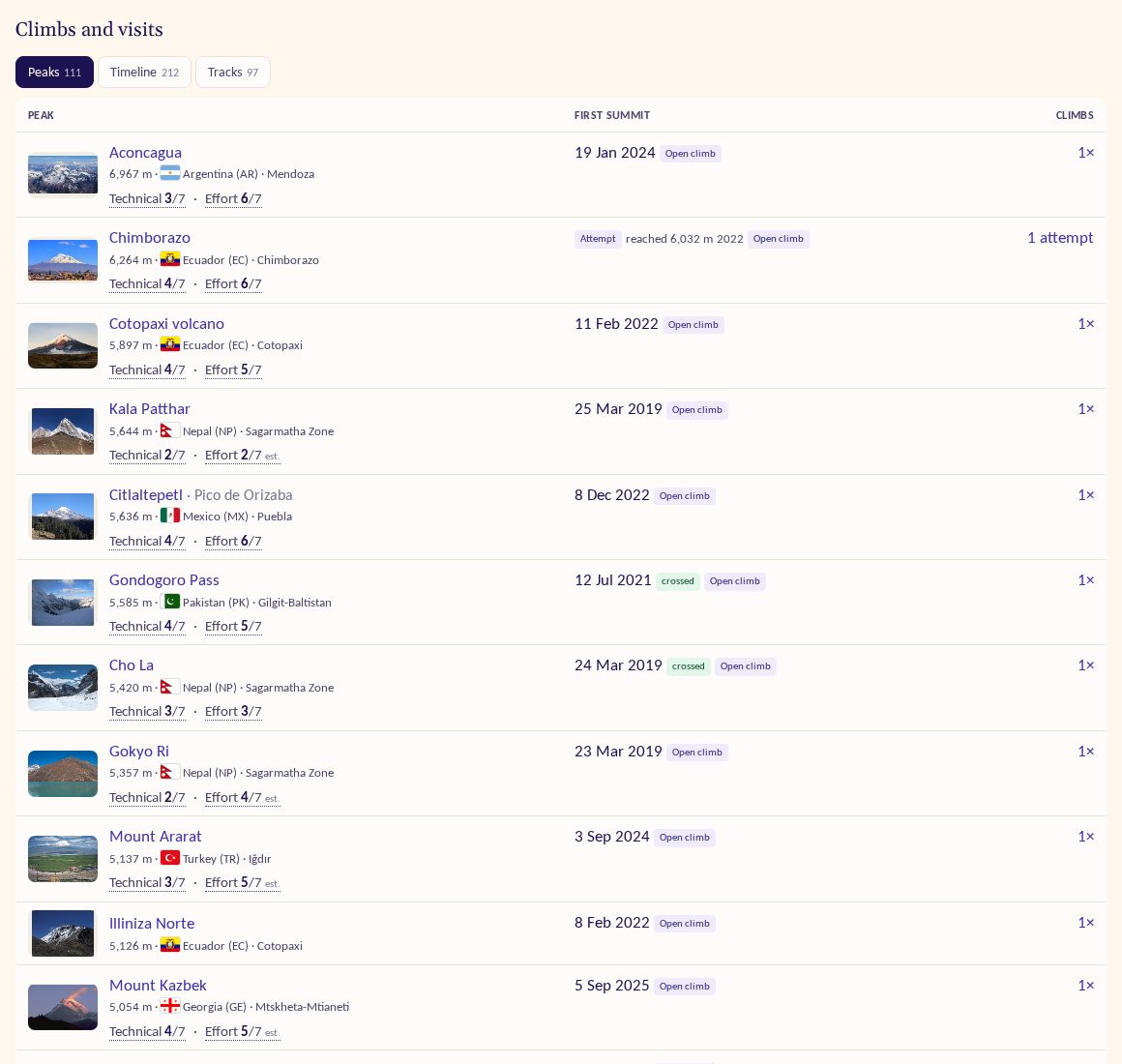
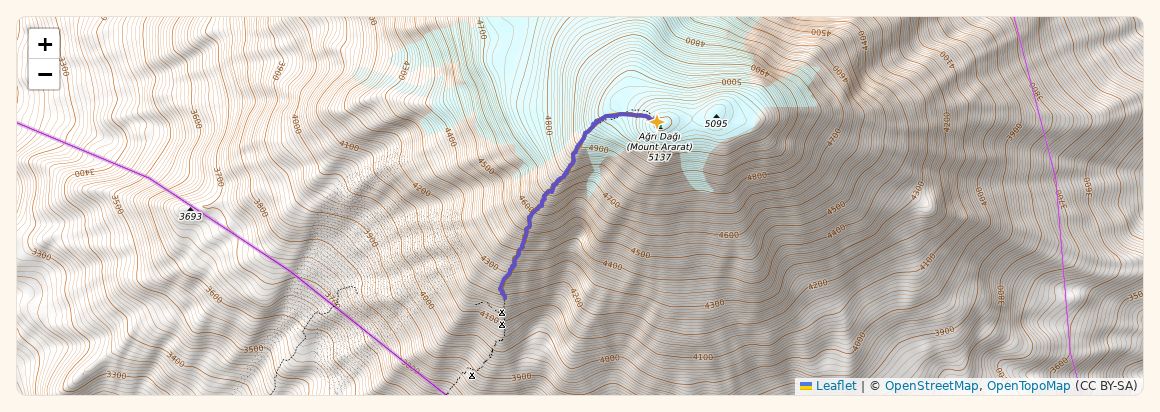
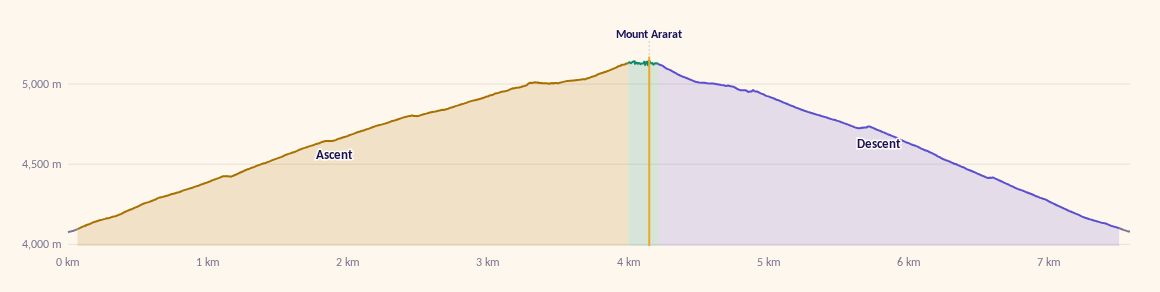
Day three was the day My Dream Peaks stopped being a catalogue you read and became a place where you keep your own mountains. Built with Claude, we added member accounts and a climbs log, a Garmin import that finds summits in your tracks without you lifting a finger, and a page for each climb that shows the day as it happened.
Your own account and climbs log
Climbers can now sign up, sign in and keep a profile with a photo, links and their own visibility settings. You can star peaks, keep several peak lists, and log summits as well as attempts. A "Log a climb" box on the profile lets you type a peak's name in any language, pick it, fill in the climb and land back on your profile. You can also paste a whole list of past climbs, with loose dates in any language, and review the matches before anything is saved.
A second stage followed in the afternoon: connections with other climbers, member search, a feed, climbing partners you can tag on a climb, notifications on the site and by email, and your progress on famous lists. On a list page you can add peaks by name right there, and a progress bar appears once something is climbed.
Garmin finds your summits
In the evening came the Garmin import. With your own Garmin key, a background worker pulls in your activities and keeps the full raw archive, including the original FIT files. It then checks each track against our peaks. A track that reached the summit's height (within 15 m) less than 300 m away also counts, because our own summit position is sometimes off; The Cobbler was the test case. You can set an "import from" date, and when you answer "yes, I was on top" or "no", that answer becomes ground truth and survives later re-checks.
A page for each climb
Each Garmin climb now has its own page: the track on a map, elevation profiles by time and by distance with ascent and descent highlighted, gain and loss, time, vertical metres per hour and one-minute heart-rate ranges for the way up and the way down. Others only see it if your profile allows, and the track they see is trimmed for privacy. The peak name links back to the peak.
A face: Night Ascent
Late in the day the site got its brand, Night Ascent: midnight, gold, snow and paper colours in light and dark mode, Georgia titles, a disc symbol in the header, a favicon and a vector logo on the home page. The name in text became "My Dream Peaks", three words. Photos are no longer cropped; you see the whole picture.
Also
- Mountain passes became their own kind of place: never counted as summits, but you can mark "I crossed it", and range pages list them (Thorong La included).
- Common English names appear next to local ones when they truly differ, like Imja Tse · Island Peak.
- List rows show one compact Technical · Effort line instead of a pile of chips.
- Behind the scenes: effort estimates now slow down with altitude (Lenin Peak is no longer rated below Aconcagua), massifs lend their name to their summit (Marmolada), and 85 well-known summits got sharper positions.