 My Dream Peaks
Exploring mountains
Huts, camps, sights and climbers
Places on the way to the summits — huts, camps, refuges and trailheads — and the climbers who made mountain history.
Huts, camps and trailheads
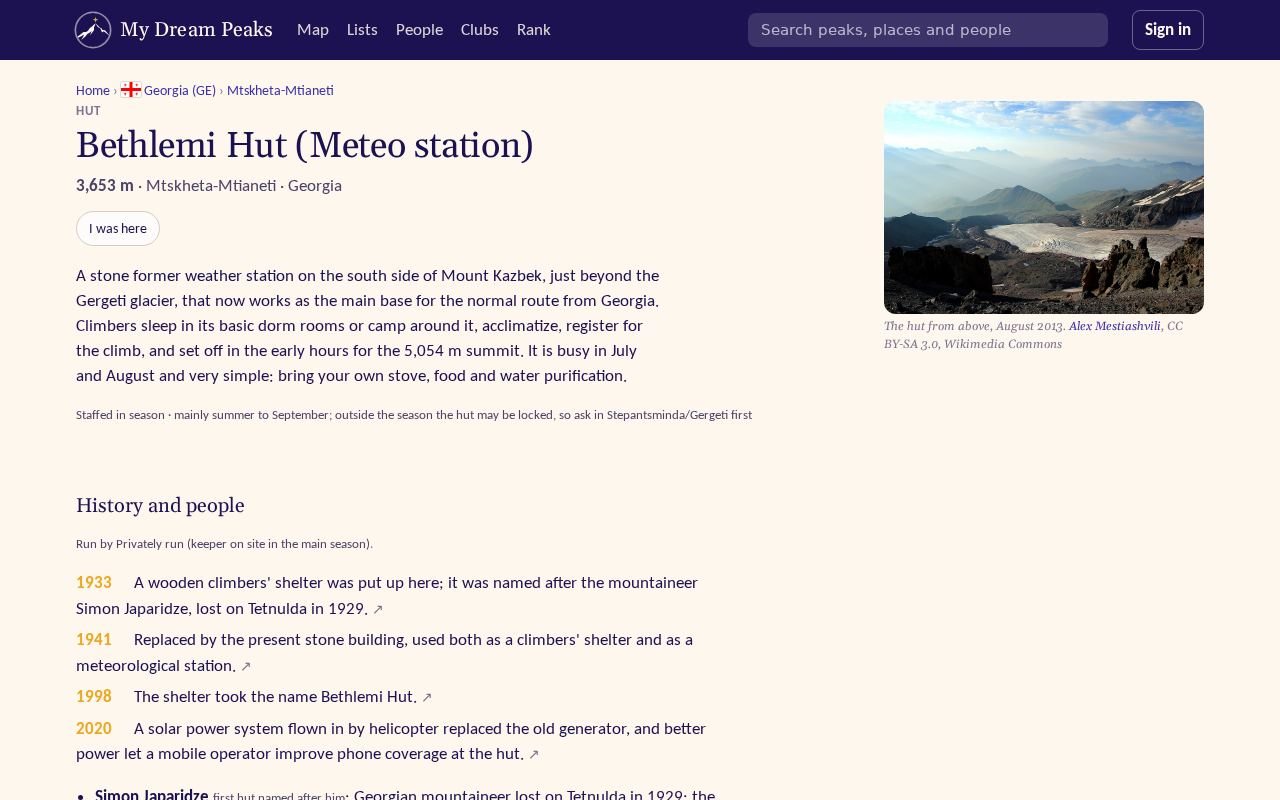
A place is anywhere you stay or start on the way to a summit: mountain huts and refuges, base and high camps, trailheads, and the villages expeditions set out from. Find them on the Huts and camps tab of search, on the map, and on every peak page under Huts, camps and trailheads.
A researched place page tells you:
- Getting there and climbing from here — the approach, and the routes that pass it;
- Peaks it serves (for a trailhead: peaks climbed from here);
- Treks it lies on, as a stop in order;
- Good to know — practical facts, each with its source;
- History and people, Links and Sources.
Every place page — huts, camps, trailheads, villages and sights — also has a Weather forecast for the next 7 days at the place's own elevation and today's sunrise, sunset and daylight, as on peak pages, with links to other forecasts and the avalanche bulletin where there is one.
Sights
Sights are the natural features hikes go to: waterfalls, viewpoints, glaciers, lakes, natural arches, caves and volcanic craters — about 27,000 of them, from Wikidata. Every sight has its own page: its height and region, a photo, a Read on Wikipedia button, and its size where Wikidata gives one (Area, Length, a waterfall's Drop, a lake's Deepest point). Peaks nearby lists the summits around it.
Glaciers are drawn on their page with their outline from the Randolph Glacier Inventory (RGI 7.0), the world's glacier outlines. Your track counts as reaching a glacier when it comes within 100 m of the ice at the ice's height — not when you only see it from a valley or a ridge. Glaciers without an outline count when your track passes close to their point at about their height.
On maps, sights have their own markers so they don't look like huts: a round badge with a symbol for each kind — a waterfall, lake waves, a glacier tongue, an eye for viewpoints, an arch, a cave, a crater — blue for water, light blue for ice, brown for rock and green for views. Huts, camps and trailheads keep the small house.
Logging a stay
Signed in, press I was here on a place page to log a visit — a night in the hut, a stop at the camp. If your GPS track passed the place, the site offers the visit for you (see Tracks). Your visits show on your profile timeline, and the place page then shows Your photos here from your visits. Any place your GPS tracks reached — a waterfall, a viewpoint, a hut you never logged — says You have been here on its page, with the date and a link to the track, so you notice when you've been somewhere before.
Climbers
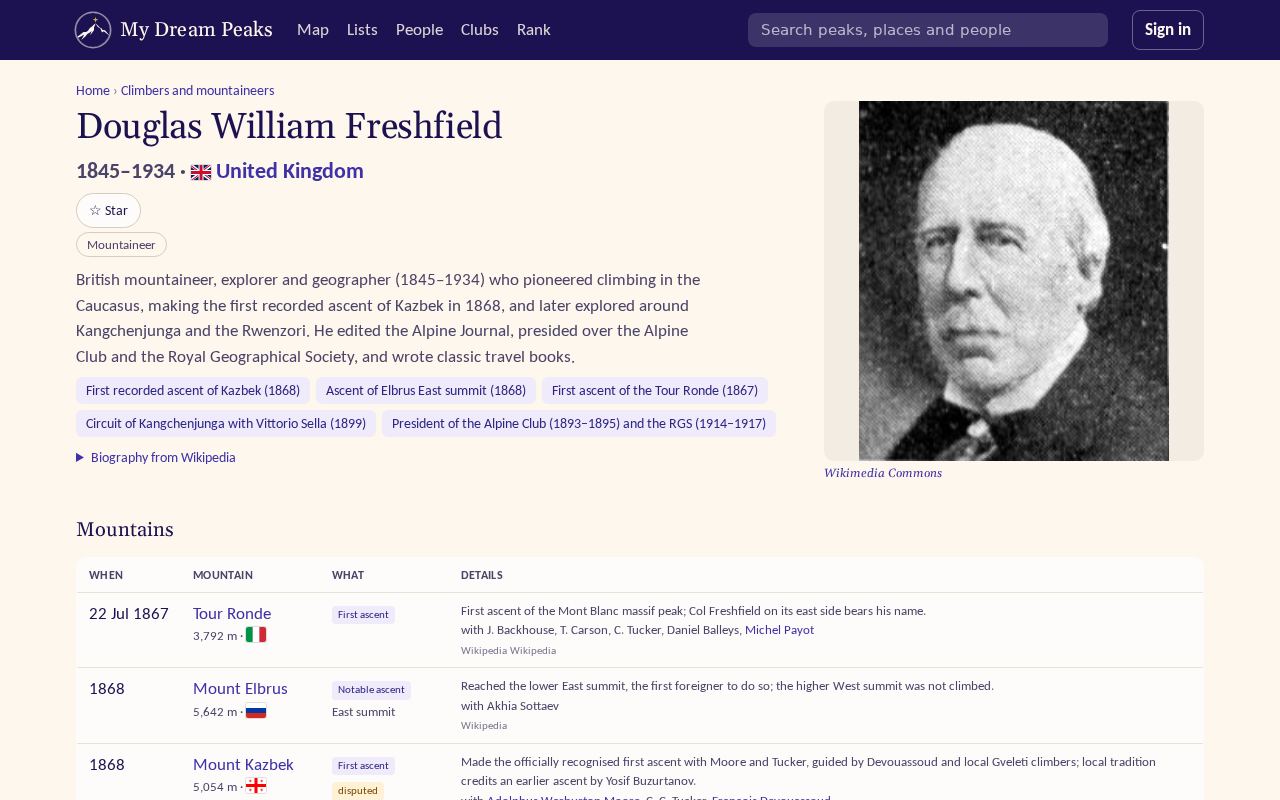
People (top menu) is a directory of notable climbers, mountaineers and skyrunners — from the first ascensionists of the 1800s to today's alpinists. Search it by any spelling of a name, by country or by discipline. A climber's page has a short life story, their notable climbs, links to the peaks they're known for, and sources (often in their own language).
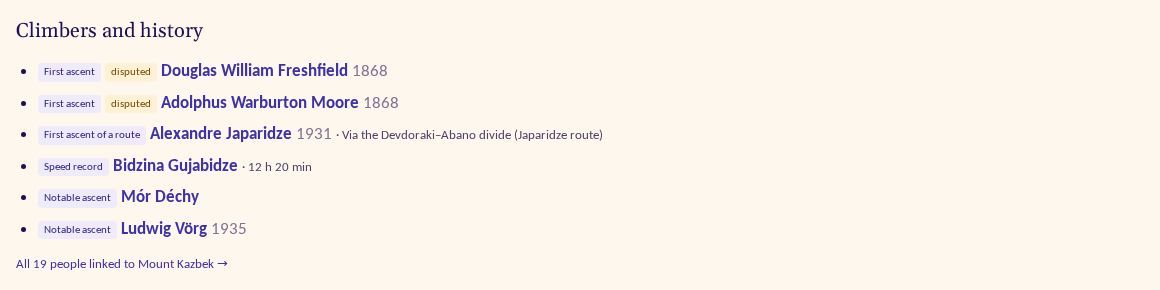
The link works both ways: every peak page has Climbers and history, with first ascents and famous climbs.
People here are public figures of mountain history. Members of the site are never in this directory — you find members under Find members in your menu.
Checked against the site on 18 November 2026 · All help pages · Questions: [email protected]